
How to Make a New-Build House Feel Like a Luxury Home
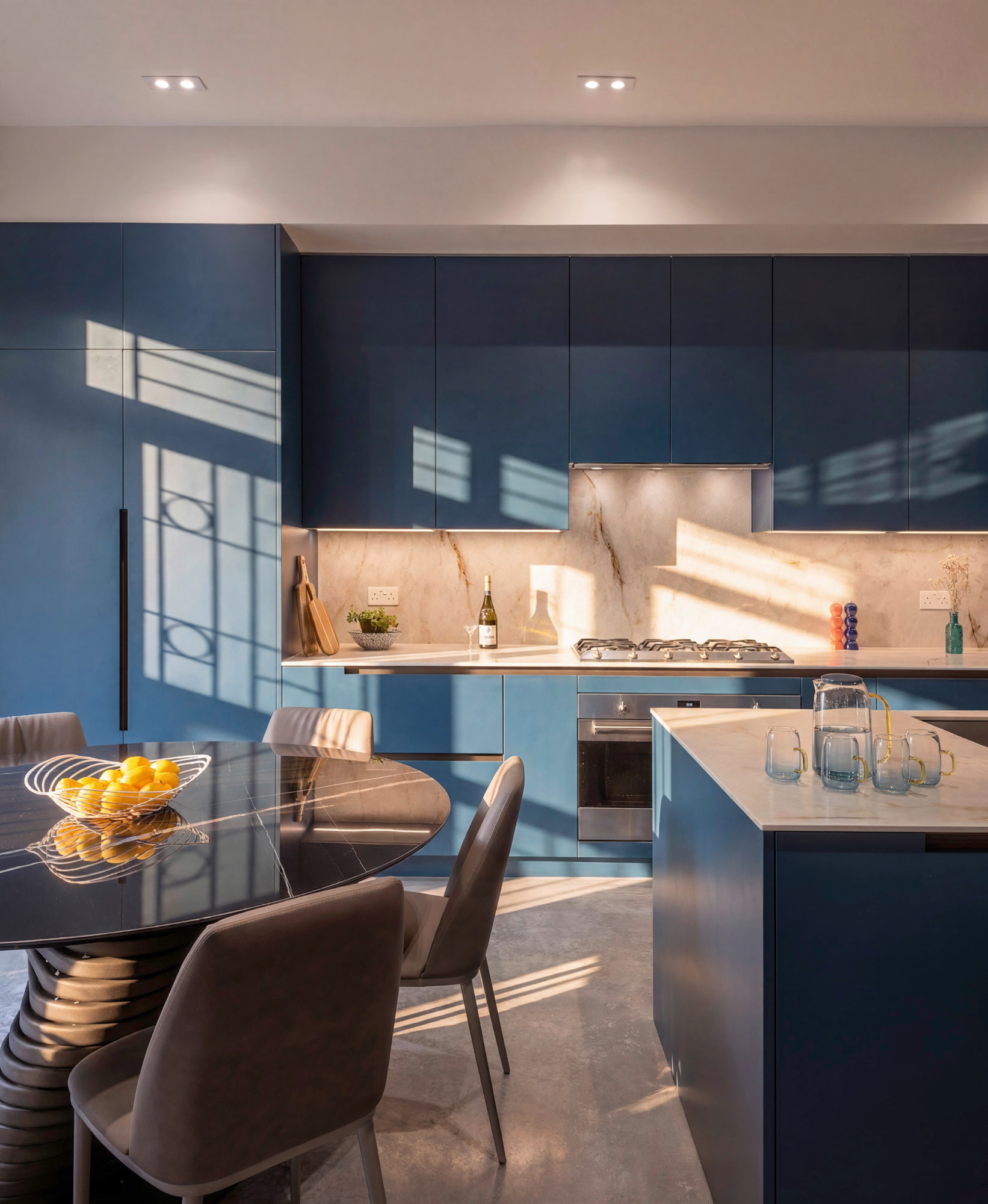
Buying a new-build home comes with plenty of advantages. Everything is fresh, modern and ready to be made your own. Yet many homeowners find themselves facing the same challenge once they move in: the house may be new, but it doesn't necessarily feel personal.
New-build properties are often designed with a broad market in mind. Neutral walls, standard flooring, identical fittings and practical layouts can create a blank canvas, but they can also leave a home feeling somewhat generic.
The good news is that thoughtful interior design can completely change this.
With the right combination of bespoke joinery, lighting, materials, colour and furniture, a new-build can feel every bit as individual and sophisticated as a period property.
Here are some of the ways to create a more luxurious and characterful new-build home.
Start with the architecture
Before choosing furniture or colours, look carefully at the structure of the property.
One of the biggest mistakes homeowners can make is trying to decorate around a house without considering how the rooms connect.
Look at the proportions of each room, ceiling heights, windows, natural light and the relationship between spaces.
An interior designer can help identify opportunities that may not be immediately obvious, such as creating stronger focal points, improving circulation or using joinery to make a room feel more architectural.
The aim is not to fight the property. It is to enhance it.
Introduce bespoke joinery
New-build properties often lack the architectural detailing found in older homes.
This is where bespoke joinery can make a significant difference.
Built-in cabinetry, media walls, wardrobes, shelving and storage can introduce character while making the most of every available centimetre.
A beautifully designed wall unit can become an architectural feature in a living room. Floor-to-ceiling wardrobes can give a bedroom a more polished appearance. Bespoke storage can also eliminate the need for lots of freestanding furniture, helping rooms feel calmer and more spacious.
Most importantly, joinery can be designed specifically for your home rather than being adapted from a standard range.
Upgrade the lighting
Lighting is one of the easiest ways to change the atmosphere of a new-build.
Standard ceiling fittings can often make a room feel functional rather than luxurious.
Instead, think about lighting as part of the architecture.
Wall lights, pendant lights, concealed LED lighting, picture lights and carefully positioned downlights can all create layers of illumination.
Consider how the room will be used at different times of day.
Bright lighting might be useful for practical tasks, while softer lamps and accent lighting can create a warmer atmosphere in the evening.
The result should be a home that feels inviting rather than simply well lit.
Choose flooring carefully
Flooring has a huge visual impact because it covers such a large proportion of the home.
If your new-build comes with standard flooring, replacing or upgrading it can immediately change the overall feel of the property.
Timber flooring can add warmth and texture, while large-format stone or porcelain can create a more contemporary aesthetic.
The key is to think about continuity.
Using the same or complementary flooring across connected spaces can make a home feel larger and more cohesive.
Move beyond the standard neutral palette
Neutral interiors can be beautiful, but there is a difference between sophisticated neutrals and a home where every surface is simply beige or white.
Consider introducing subtle layers of colour.
Warm taupes, earthy greens, deep blues, soft terracotta and muted browns can all bring personality without making a home feel overly colourful.
Colour can also be introduced through furniture, artwork, curtains, rugs and accessories rather than being limited to walls.
The best palette is one that reflects the people living in the home.
Add texture
Texture is particularly important in new-build interiors because it helps prevent a space from feeling flat.
Think about combining materials such as:
Natural timber
Linen
Bouclé
Wool
Stone
Brushed metal
Glass
Textured plaster
Soft upholstery
Layering different textures creates depth and makes rooms feel more sophisticated.
It is often this combination of subtle details that makes an interior feel luxurious without relying on excessive decoration.
Invest in the right furniture
Furniture should be chosen according to the proportions of the room rather than simply because a particular piece looks attractive.
A common issue in new-build homes is furniture that is too small for the space.
A generous sofa, appropriately sized dining table or large rug can often make a room feel more finished and intentional.
Where possible, mix different styles and materials rather than buying everything from the same collection.
This helps the home feel collected and personal rather than like a showroom.
Make storage part of the design
Clutter can quickly undermine an otherwise beautiful interior.
This is particularly relevant in new-build homes, where storage may be practical but not necessarily tailored to your lifestyle.
Consider what you actually need to store and where those items should live.
Bespoke cabinetry can be designed around everything from books and technology to children's belongings, coats, shoes and everyday household items.
When storage is integrated into the design, it becomes part of the interior rather than something that needs to be hidden.
Don't forget the smaller details
Replacing small standardised details can make a surprisingly big difference.
Door handles, switches, sockets, taps, curtain poles and cabinet hardware can all contribute to the overall aesthetic.
Individually, these may seem insignificant. Collectively, they can determine whether an interior feels considered or generic.
The same principle applies to artwork, mirrors, rugs, cushions and accessories.
These are the details that give a new-build its personality.
Create a sense of character
One of the advantages of an older property is the character that already exists.
With a new-build, you have the opportunity to create your own version of that character.
This might come through bespoke cabinetry, statement lighting, carefully selected artwork, architectural details or a combination of materials.
The goal isn't to make a new-build look old.
Instead, it is about creating a home that feels established, personal and unique to you.
Design the whole home rather than individual rooms
Finally, consider the property as a whole.
Even if you are only renovating certain rooms, the strongest interiors usually have a visual relationship between spaces.
Colours, materials, flooring, lighting and joinery can be repeated subtly throughout the home to create continuity.
This doesn't mean every room needs to look identical.
Quite the opposite.
Each room can have its own atmosphere while still feeling like part of the same home.
Turning a new-build into your home
A new-build property gives you something valuable: a blank canvas.
With thoughtful design, it can become much more than a standard house.
It can become a home that reflects your personality, supports your lifestyle and feels considered down to the smallest detail.
At Narulas Design Studio, we create bespoke interiors for homeowners across North London and Greater London, from individual rooms to complete home transformations.
If your new-build feels like it is missing something, professional interior design can help turn that blank canvas into a home that feels distinctly yours.